Story structure and sequencing
Beginning, middle and end, the problem and its solution, and how each part of a story builds on the one before
About three lessons of 40 to 50 minutes
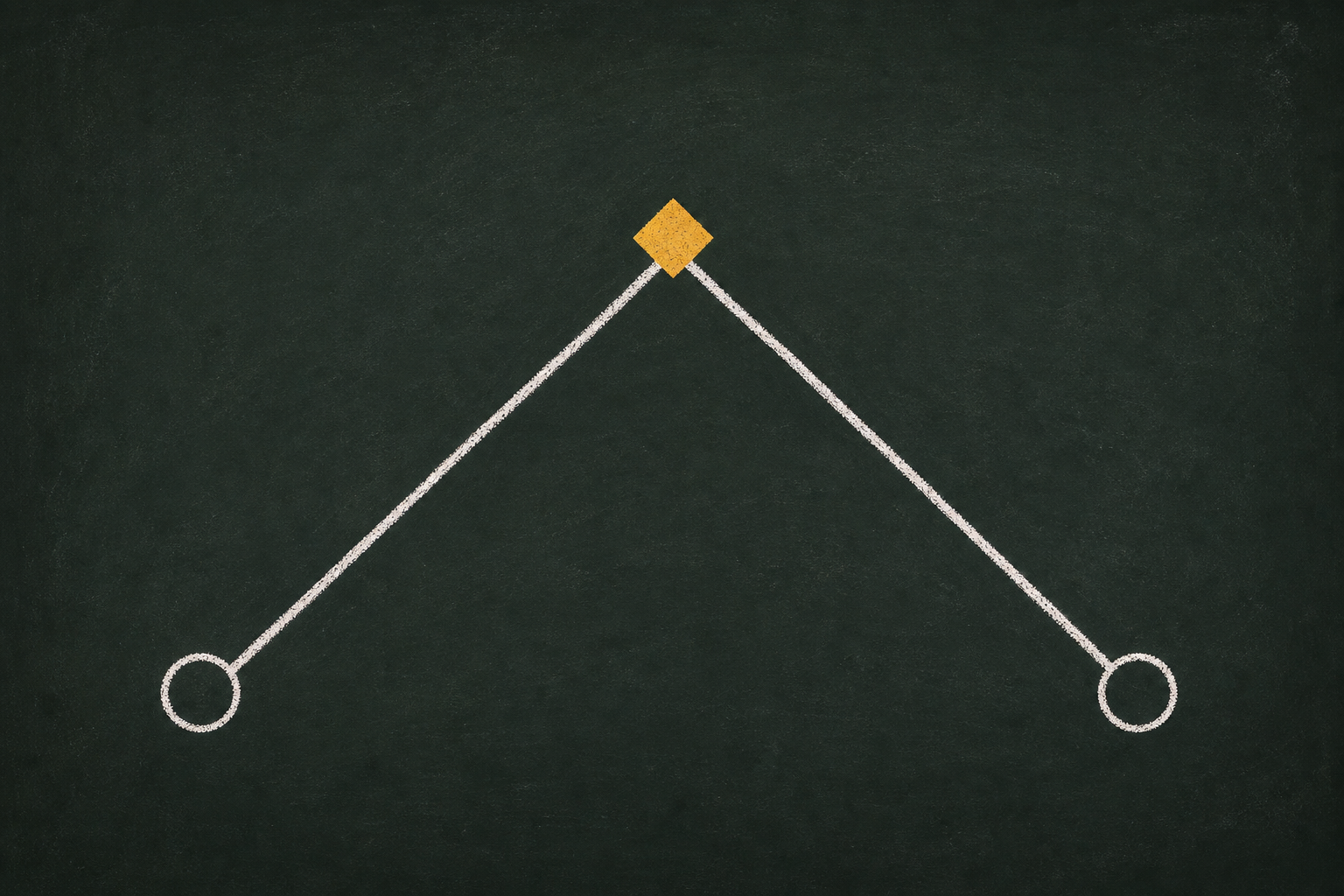
Every story is a journey
Think of a story as a journey. It has a place you set off from, where you meet the traveller and see where they live. Then comes a bump in the road, some trouble that gets in the way and has to be dealt with. And finally there is the place you arrive, where the trouble is sorted out and the journey ends.
That shape is the same in almost every story you read: a beginning, a middle and an end, with a problem that starts in the middle and a solution that finishes it. Today you will learn to spot each part, to see how one part leads to the next, and to put the events of a story in the right order.
- The beginning: the setting and characterswho the story is about and where and when it happens
- The middle: the problemthe trouble that gets in the way and drives the story on
- The end: the solutionhow the problem is sorted out and the story finishes
- In order: first, next, then, lastthe events of a story happen in a sequence you can follow
What students will be able to do
Students will understand that a story is built from a beginning, a middle and an end, will identify the setting and characters in the beginning, the problem in the middle and the solution in the end, will explain how each part builds on the one before, and will put the events of a story in sequence and retell it in order using ordering words.
- I can name the three parts of a story: the beginning, the middle and the end.
- I can find the setting and the characters in the beginning of a story.
- I can find the problem in the middle and the solution in the end.
- I can explain how each part of a story builds on the part before it.
- I can put the events of a story in order and retell it using words like first, next, then and last.
Standards this unit teaches
- RL.3.5Common Core (US)Refer to the parts of a story and how they build
Refer to parts of stories, dramas, and poems when writing or speaking about a text, using terms such as chapter, scene, and stanza; describe how each successive part builds on earlier sections.
- RL.3.3Common Core (US)Characters, their actions and the sequence of events
Describe characters in a story (their traits, motivations, or feelings) and explain how their actions contribute to the sequence of events.
- RL.3.2Common Core (US)Recount a story and its central message
Recount stories, including fables, folktales, and myths from diverse cultures; determine the central message, lesson, or moral and explain how it is conveyed through key details in the text.
- AC9E3LE03Australian Curriculum v9 (ACARA)How settings and events shape the narrative
Discuss how an author uses language and illustrations to portray characters and settings in texts, and explore how the settings and events influence the mood of the narrative.
Printable anchor chart
Print a wall poster to go with this unit, a code-drawn diagram students can point to during and after the lesson.
Prior knowledge
This unit builds on skills students should already have met. Revisit any that are shaky first.
- Making inferencesreaders infer a character's feelings and motives, which is what drives the problem and the solution
- Main idea and detailsfinding the point of a paragraph is the same habit as finding the point of a whole story
- How to teach sequencingordering events with first, next, then and last is the sequencing skill this unit puts to work on stories
- Building reading fluencysmooth, accurate reading frees up the attention students need to hold a whole story in mind
Words to teach and display
- Story structure
- the shape of a story: a beginning, a middle and an end, with a problem and a solution
- Setting
- where and when a story takes place
- Character
- a person or animal the story is about, who acts and feels
- Problem
- the main trouble that gets in the way and drives the middle of the story
- Solution
- how the problem is sorted out, which brings the story to its end
- Sequence
- the order in which the events of a story happen, from first to last
- Inference
- a conclusion you work out from clues, used to read a character's feelings and motives
- Main idea
- what a whole text is mostly about; a story's is often its lesson or message
Teach it: model, guided practice, independent
The lesson moves from a teacher think-aloud, to mapping the parts of a story together, to students charting a story on their own. Every example is a short narrative, so structure is practised on real text rather than learned as a list of words. Read each story aloud, then show your thinking out loud before students try.
1. A story is a journey: beginning, middle and end
Open with the journey. Every story sets off from somewhere (the beginning), runs into trouble along the way (the middle), and arrives at a finish where the trouble is sorted out (the end). Keep those three words on the board all unit, because almost every story you read has this same three-part shape.
Anchor the idea that the parts are not equal slices. The beginning is usually short: it sets the scene. The middle is the longest part, because that is where the trouble grows. The end is short again: it ties things off.
Stress that the parts are joined, not separate. The setting in the beginning makes the problem in the middle possible, and the problem in the middle is what the solution in the end has to answer. One part leads to the next.
- What are the three parts of a story?
- Which part is usually the longest, and why?
- How does the beginning of a story lead into the middle?
2. The beginning: setting and characters
Zoom in on the beginning. Its job is to answer two questions for the reader: who is this story about (the characters) and where and when does it happen (the setting). Model finding both in the opening lines of a story, because a reader who misses the setting and characters is lost for the rest of the journey.
Teach students to ask 'who?' and 'where and when?' as they read the opening. The characters are the people or animals who act, and the setting is the place and time they act in.
Point out that authors often show the setting rather than announce it. Snow on the ground and a frozen pond tell you it is winter without the word winter, which is the same clue-reading habit used when making inferences.
Read the beginning and name the setting and the main character. 'The lighthouse stood alone at the edge of the cliff. Every night, old Tom climbed its winding stairs, lit the great lamp, and watched the dark waves crash far below.'
- Ask 'who?': the main character is old Tom, the lighthouse keeper.
- Ask 'where and when?': the setting is a lighthouse on a cliff by the sea, at night.
- Check both are drawn from the words on the page, not guessed.
Answer: Character: old Tom. Setting: a lighthouse on a cliff by the sea, at night. The beginning has told us who the story is about and where it happens.
- What two things does the beginning of a story tell the reader?
- Who is the main character, and what is the setting, in the lighthouse story?
3. The middle: the problem
The middle is the heart of the story, and its engine is the problem. The problem is the main trouble that gets in the way: something the character wants but cannot easily have, or something that goes wrong. Teach students to find the one big problem, because that trouble is what every event in the middle is about.
Model the question that finds it: what is the main trouble in this story, the thing the character has to deal with? Not any small bump, but the big one that drives the whole middle.
Show that the middle is a chain of events that grow out of the problem: the character tries something, it does not work, they try again. Each event builds on the one before, which is exactly what RL.3.5 means by each part building on earlier sections.
Read the middle and name the main problem. 'Old Tom reached for the matches, but the box was empty. Without a flame the great lamp stayed dark, and out at sea a small fishing boat was heading straight for the rocks. He searched every drawer, but there was not a single match to be found.'
- Ask what the main trouble is: Tom cannot light the lamp because he has no matches.
- Check why it matters: without the light, the fishing boat could crash on the rocks.
- See how the events grow from the problem: he searches the drawers because of the trouble.
Answer: The problem is that Tom has no matches to light the lamp, and a boat is in danger without its light. Everything in the middle grows out of this one trouble.
- What is the problem in a story, and where in the story does it belong?
- What is old Tom's main problem, and why does it matter?
4. The end: the solution
The end brings the journey home. Its job is to show the solution: how the problem is sorted out. A good ending answers the problem the middle set up. Teach students that the end is not just where the story stops, it is where the trouble is resolved, and often where the character has changed or learned something.
Tie the end back to the middle. A solution has to answer the exact problem: if the problem was no matches, the solution has to solve the darkness, not something unrelated.
Point out that many stories close with a small lesson or a change in the character. That closing message is the story's main idea, the thing it is really about, which links back to finding the main idea of a text.
Read the end and name the solution. 'Then Tom remembered the spark-lighter he kept for the stove. With shaking hands he struck it, and the great lamp blazed to life. Far below, the fishing boat turned safely away from the rocks. Tom never let the match box run empty again.'
- Ask how the problem is solved: Tom uses the spark-lighter to light the lamp instead of matches.
- Check the solution answers the problem: the light comes on, so the boat is safe.
- Notice the change in the character: Tom learns to keep the matches stocked, a small lesson.
Answer: The solution is that Tom lights the lamp with his spark-lighter and saves the boat. The end answers the problem from the middle, and Tom learns to be prepared.
- What does the solution of a story do?
- How does the ending of the lighthouse story answer its problem?
5. Sequencing: putting the events in order
Finish with the skill that holds a story together: sequence. The events of a story happen in an order, and a reader who scrambles that order loses the sense of it. Teach the ordering words (first, next, then, after that, finally) and use them to retell a story in the order things happened.
Model a retell using the ordering words: first the setting, next the problem appears, then the character tries to solve it, finally the solution. The ordering words are signposts that keep the retell in order.
Warn students to order events by when they happened, not by which was most exciting. Time words in the text (that morning, later, at last) and cause and effect (this happened because of that) are the clues that fix the order.
Put these events of the lighthouse story in order using ordering words. 'The lamp blazed to life and the boat turned away.' / 'Tom climbed the stairs to light the lamp.' / 'Tom found the match box was empty.' / 'Tom remembered his spark-lighter.'
- Find what happened first: Tom climbed the stairs to light the lamp (the beginning).
- Find the problem next: he found the match box empty (the middle).
- Find how it was solved: then he remembered his spark-lighter, and finally the lamp lit and the boat turned away (the end).
Answer: First, Tom climbed the stairs to light the lamp. Next, he found the match box empty. Then he remembered his spark-lighter. Finally, the lamp blazed to life and the boat turned away. Ordered from beginning to end.
- Name three ordering words you can use to retell a story in order.
- Should you order events by when they happened or by how exciting they were?
Common misconceptions and how to address them
MisconceptionThe beginning of a story is just the first sentence.
Why it happens: Students take 'beginning' literally as the opening line, rather than the opening part that sets up the whole story.
How to address it: Show that the beginning is a section, not a sentence: it lasts as long as it takes to set the scene and introduce the characters. Mark where the beginning ends and the trouble starts, so students see it as a part with a job to do.
MisconceptionThe problem is any bad thing that happens, so a story can have lots of problems.
Why it happens: Students spot every small setback and label each one 'the problem', losing the one that drives the story.
How to address it: Ask for the one main trouble the whole middle is about. Small bumps are events inside the middle; the problem is the big trouble the solution has to answer at the end.
MisconceptionThe end is simply where the story stops.
Why it happens: Students treat the last line as the end without checking that the problem was resolved.
How to address it: Teach that the end is where the problem is solved, not just where the words run out. Test an ending by asking whether it answers the problem from the middle. If the trouble is still hanging, the story is not really finished.
MisconceptionYou should retell a story by starting with the most exciting bit.
Why it happens: The exciting event sticks in memory, so students lead with it instead of with what happened first.
How to address it: Retell in time order using the ordering words: first, next, then, finally. Use the time words and cause-and-effect clues in the text to fix the sequence, not how thrilling each event felt.
MisconceptionEvery event in a story matters the same amount, so a good retell includes all of them.
Why it happens: Students think a complete retell means listing every detail they can remember.
How to address it: A retell keeps the events that move the story from problem to solution and drops the small extras. This is summarising applied to a story: keep the parts that carry the structure.
MisconceptionA story only has a problem if someone gets hurt or something goes badly wrong.
Why it happens: Students expect the problem to be a disaster, so they miss quieter problems like wanting something or making a choice.
How to address it: Widen the idea of a problem: it is anything the character wants but cannot easily get, or a decision they must make. Losing a pet, making a new friend or entering a race are all problems that drive a story.
Guided practice (with answers)
1. Name the three parts of a story and say what each one is for.
Answer: The beginning sets up the setting and characters, the middle presents the problem and the events it causes, and the end shows the solution.
2. Read the beginning and name the setting and main character. 'On the first hot morning of summer, Priya set up a small stall at the end of her street, a jug of lemonade and a hand-painted sign ready to go.'
Answer: Character: Priya. Setting: the end of her street, on a hot summer morning.
3. In a story where a boy loses his dog at the park and searches everywhere until a jogger brings it back, what is the problem and what is the solution?
Answer: Problem: the boy has lost his dog at the park. Solution: a jogger finds the dog and brings it back to him.
4. A reader says the problem in a story is that 'the sky was blue'. Why is that not the problem?
Answer: A blue sky is just a detail of the setting, not a trouble the character has to deal with. The problem is the main trouble that drives the middle of the story.
5. Put these events in order using ordering words: 'She crossed the finish line first.' / 'Maya laced up her running shoes.' / 'She fell behind at the halfway mark.'
Answer: First, Maya laced up her running shoes. Next, she fell behind at the halfway mark. Finally, she crossed the finish line first.
6. How does the end of a story connect to the middle?
Answer: The end shows the solution, which has to answer the exact problem set up in the middle. The solution resolves the trouble the middle created.
Independent practice worksheets
Set the matching ChalkBee reading and story worksheets for independent work. Start by mapping the parts of a familiar narrative, then chart the structure of a reading passage, marking the beginning, the problem, and the solution.
Differentiation
- Use a short, familiar story (a fairy tale students already know) so the structure is easy to see before meeting a new text.
- Give a three-box story map labelled beginning, middle and end, and have the student write one sentence in each box.
- Provide a sentence frame: 'The problem is ___. It is solved when ___.'
- Read the story aloud so decoding does not use up the attention the student needs to follow the whole shape.
- Map a longer chapter story and show how each chapter builds on the one before, using the RL.3.5 language of successive parts.
- Identify a story's central message or lesson and explain how the solution reveals it.
- Write a new middle for a familiar story: keep the same setting and characters but give it a different problem.
- Compare the structure of two stories on a similar theme and discuss how each handles its problem and solution.
Assessment: exit ticket
A three-question exit ticket done on a slip in the last few minutes. It samples naming the parts, finding the problem and solution, and sequencing.
1. Name the three parts of a story and one thing each part does.
Answer: Beginning: sets up the setting and characters. Middle: presents the problem. End: shows the solution.
2. In a story where a girl cannot reach a kite stuck in a tree until she fetches a long pole and frees it, what is the problem and the solution?
Answer: Problem: her kite is stuck in the tree. Solution: she fetches a long pole and frees it.
3. Put these in order: 'The seed grew into a tall sunflower.' / 'Ben planted a seed in a pot.' / 'A green shoot pushed up through the soil.'
Answer: First, Ben planted a seed in a pot. Next, a green shoot pushed up through the soil. Finally, the seed grew into a tall sunflower.
Teacher notes and timings
- Rough timing across three lessons: Lesson 1 the three parts plus the beginning (sections 1 and 2), Lesson 2 the problem and the solution (sections 3 and 4), Lesson 3 sequencing plus the exit ticket (section 5 and assessment).
- Language to keep saying: beginning, middle and end; what is the main problem; how is it solved; first, next, then, finally. These phrases pre-empt most of the misconceptions.
- Keep a three-box story map on view all unit. Beginning, middle and end, with the problem and solution marked, is a shape students can point to for any story they read.
- Use a story students already know for the first model, then move to fresh reading passages. The structure is easiest to see when the content is familiar.
- This unit builds on the inference and main-idea units: reading a character's feelings drives the problem, and a story's lesson is its main idea. Cross-refer to those units when students need the underlying skill.
- Use Student view to project this lesson. Print saves the full teacher unit, including answers and teacher notes; use the linked independent-practice worksheets for student handouts.