The Roman Empire and its impact on Britain
Caesar's failed raids, the power of the Roman army, the Claudian conquest and Hadrian's Wall, Boudica's rebellion, and the Romanisation of Britain
About six lessons of 45 to 60 minutes
Roman Britain still shapes Britain
Nearly two thousand years ago, one of the ancient world's most powerful empires crossed the sea and took over most of the island of Britain. The Romans ruled it for almost four centuries, longer than the time between us and Shakespeare, and when imperial rule broke down around AD 410 they left behind roads, town sites, walls and ideas that still shape Britain today.
That is why this topic is called the Roman Empire and its IMPACT on Britain. It is not just a story about battles long ago. It is a before-and-after story: what was Britain like before the Romans came, what did they change, and which of those changes can you still see, walk on, or live in right now?
- Roads you may have travelled onmany modern British roads follow the straight routes Roman engineers laid, such as the A5 along Watling Street
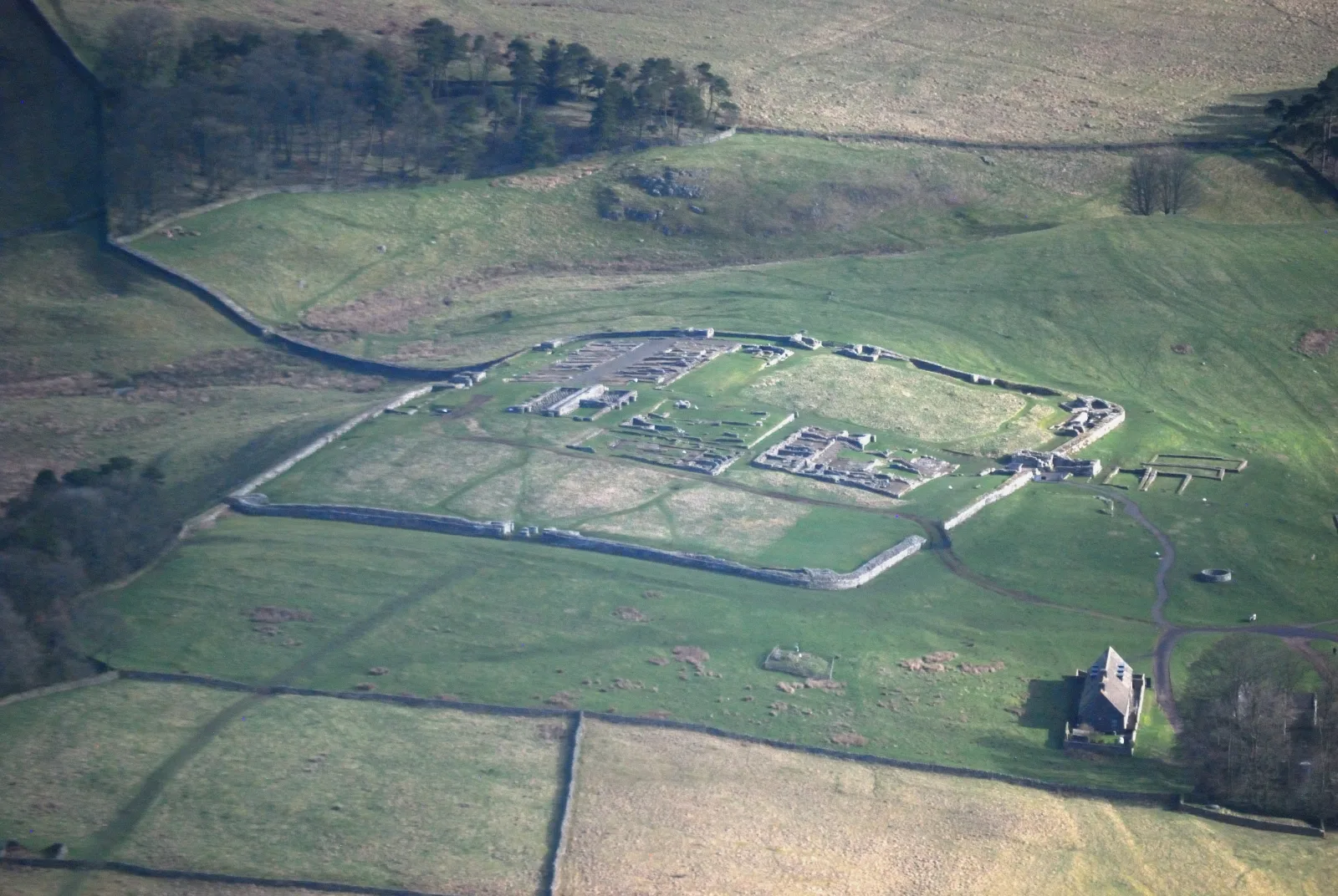
- Hadrian's Wallthe frontier barrier begun in AD 122 still runs across northern England, and you can walk beside its surviving stone sections today
- Place names ending in -chester, -caster or -cesterManchester, Doncaster and Gloucester all grew from Roman army sites; the ending comes from castra, Latin for a military camp
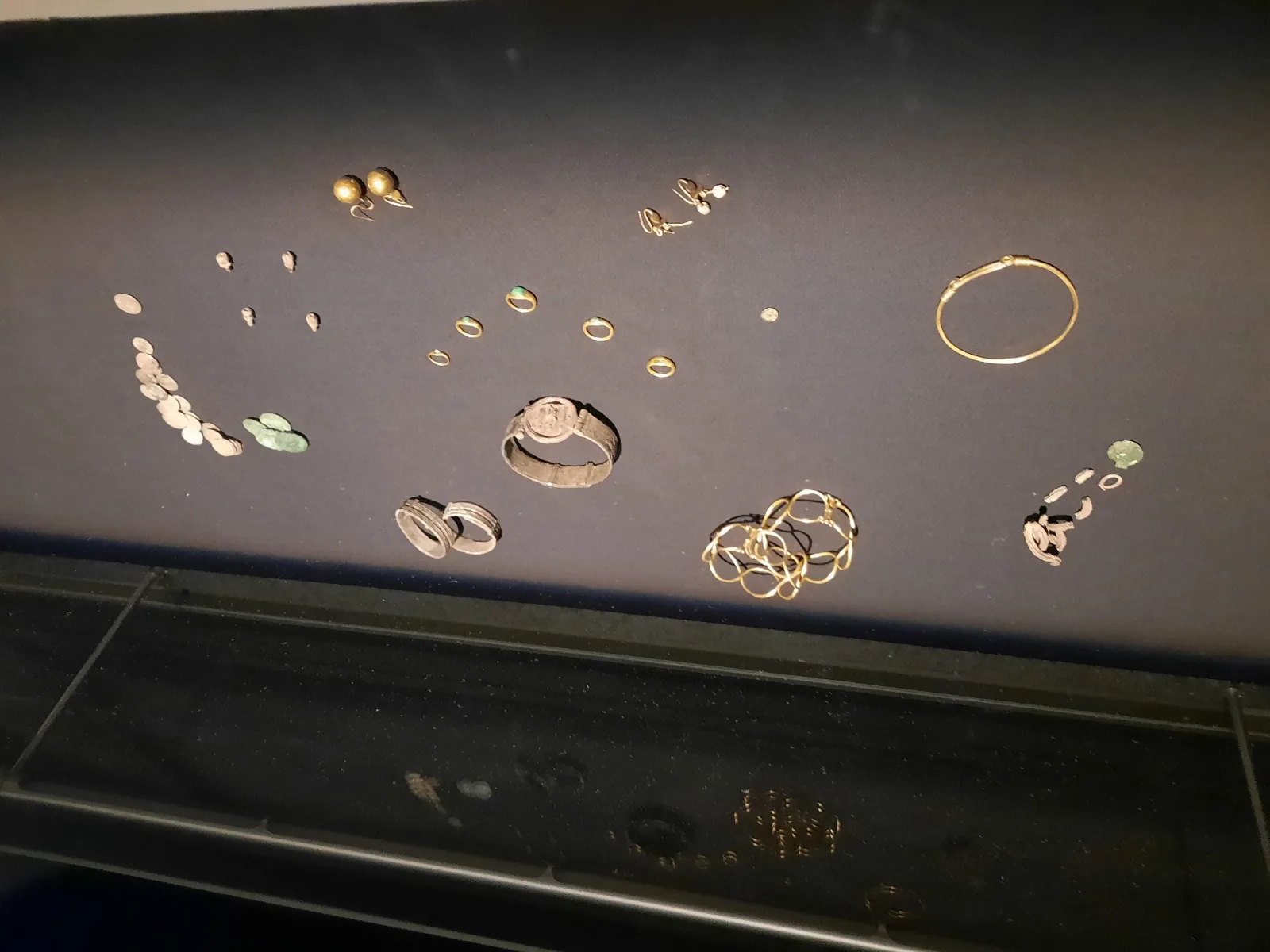
- Roman coins in British fieldsmetal detectorists still dig up hoards of Roman coins, everyday evidence that Roman money changed hands here for centuries
What students will be able to do
Students will explain why Julius Caesar's invasions of 55-54 BC did not lead to Roman rule while Claudius's AD 43 invasion did, describe the organisation and power of the Roman army, recount Boudica's rebellion and weigh the Roman-written evidence for it, and identify how 'Romanisation' changed technology, culture and beliefs in Britain, including which changes outlasted Roman rule.
- I can place Caesar's raids, Claudius's invasion, Boudica's rebellion and Hadrian's Wall in order on a timeline, using BC and AD correctly.
- I can give reasons why the Roman army was so hard for the British tribes to defeat.
- I can explain why Hadrian's Wall was built and describe where it runs.
- I can retell the story of Boudica's rebellion and explain why historians read the Roman accounts of it carefully.
- I can describe ways Britain changed under Roman rule, including early Christianity, and name changes that lasted after imperial government ended.
Standards this unit teaches
- KS2 HistoryUK National Curriculum (England)The Roman Empire and its impact on Britain
Statutory requirement: pupils should be taught about "the Roman Empire and its impact on Britain". The programme of study's non-statutory examples for this unit: Julius Caesar's attempted invasion in 55-54 BC; the Roman Empire by AD 42 and the power of its army; successful invasion by Claudius and conquest, including Hadrian's Wall; British resistance, for example, Boudica; 'Romanisation' of Britain: sites such as Caerwent and the impact of technology, culture and beliefs, including early Christianity.
Prior knowledge
This unit builds on skills students should already have met. Revisit any that are shaky first.
- Stone Age to Iron Age Britainthe Britain the Romans invaded: KS2 teaches this unit first, and the 'before' picture is what makes the Roman impact visible
- Timelines and ordering eventsthis unit runs from 55 BC to about AD 410, so pupils need BC/AD counting, the fact that there is no year zero, and timeline reading
- Primary and secondary sourcesthe surviving narrative accounts of Boudica come from Roman authors, a perfect case study in asking who wrote the evidence
Words to teach and display
- Empire
- many lands and peoples ruled by one state and, in Rome's case, one emperor
- Invasion
- entering another land with an army to take control of it
- Conquest
- taking a land and holding it long-term, not just winning one battle
- Legion
- a unit of roughly five thousand trained, full-time Roman soldiers
- Tribe
- a people with their own territory, rulers and customs, such as the Iceni of eastern Britain
- Rebellion
- an armed uprising against the rulers, such as Boudica's in AD 60-61
- Frontier
- the edge of an empire's territory; Hadrian's Wall marked Rome's north-west frontier
- Romanisation
- the way life in Britain became more Roman: towns, roads, Latin, baths and Roman beliefs
Teach it: story first, evidence always
This is a history unit, so the sequence is chronological narrative plus evidence rather than the concrete-pictorial-abstract arc of a maths unit. Each section tells the next part of one story (raid, empire, conquest, resistance, change) and names the evidence for it, so pupils learn both what happened and how we know. The five sections follow, one-to-one, the five examples the UK National Curriculum itself lists for this study unit.
1. Who the Romans were, and Caesar's failed invasions (55-54 BC)
Start with who the Romans were: a people from the city of Rome in Italy who, by the first century BC, controlled lands all around the Mediterranean Sea. Their most famous general, Julius Caesar, spent the 50s BC conquering Gaul (roughly modern France), and from its northern coast he could see the white cliffs of Britain: an island known through trade and reports, but one no Roman army had yet invaded, rich in grain, cattle and metals, and home to tribes who had been helping his enemies in Gaul.
In 55 BC Caesar crossed the Channel with two legions. It went badly: the British tribes met the landing with warriors and fast two-horse chariots, and Channel storms wrecked many of his ships. After a few weeks he withdrew to Gaul. In 54 BC he returned with a far larger fleet of about eight hundred ships, marched inland, crossed the River Thames and forced the powerful chieftain Cassivellaunus to promise tribute. Then he left again, before winter and trouble in Gaul, taking his whole army with him.
So Caesar won battles but conquered nothing lasting: no forts were garrisoned, no land was held, and no Roman governor stayed. That is why historians call these attempted invasions. What the raids did change was knowledge and contact: Rome now knew what Britain was, and over the next century the southern British tribes traded with the empire and some of their rulers became its allies. Britain stayed free for almost a hundred years, but it was no longer unknown.
- Caesar won battles in Britain twice. Why do we still say his invasions failed?
- Which comes first, 55 BC or 54 BC, and how do you know?
- What did Rome gain from the raids even though it kept no land?
2. The Roman Empire by AD 42 and the power of its army
Before telling the story of the successful invasion, zoom out to the year AD 42, the eve of it. By then the Roman Empire wrapped around the entire Mediterranean Sea: Spain, Gaul, Italy, Greece, Egypt, North Africa and lands stretching east towards Syria, tens of millions of people under one emperor. Britain was one of the last well-known places in the Roman world still outside it.
The engine of that empire was its army, and it was unlike anything in Britain. A legion was about five thousand professional soldiers: full-time, paid, signed up for twenty-five years, drilled constantly, and equipped with standard armour and weapons. Alongside the legions fought auxiliaries, supporting troops recruited from all over the empire. British forces varied by tribe and could include experienced warrior elites, but they lacked Rome's centralised, long-service army and supply system.
Just as important, the Roman army built as well as fought. Everywhere it marched it laid straight roads, bridged rivers and threw up fortified camps, so soldiers and supplies could move quickly and hold whatever was taken. This is the 'impact' setup of the whole unit: a tribe could win a single battle against Rome, but Rome's supply system, rotating reinforcements and permanent garrisons let its professional army campaign for years and hold territory.
- Name two differences between a Roman legionary and a British tribal warrior.
- Why did road-building and fort-building make the Roman army harder to beat than its battles alone?
- Why does knowing about the empire in AD 42 help explain what happened in AD 43?
3. Claudius's invasion (AD 43), the conquest, and Hadrian's Wall
In AD 43 the new emperor Claudius, who needed a military triumph to secure his position, sent about forty thousand men, four legions plus auxiliaries, under the general Aulus Plautius. They landed in southern Britain, probably at Richborough in Kent, though historians debate the exact landing place. The army defeated the strongest tribes at the River Medway and paused at the Thames so Claudius himself could arrive and lead the capture of Camulodunum (modern Colchester), the enemy capital. Roman sources say he brought war elephants, and that British kings surrendered to him in person. This time the army did not leave.
Unlike Caesar, Claudius's army stayed and held what it took: forts were garrisoned, roads were driven inland, and Camulodunum became the first capital of the new Roman province of Britannia. Even so, the conquest was slow. It took decades of hard campaigning to push Roman control west into Wales and north through the island. Roman armies campaigned deep into what is now Scotland and briefly moved the frontier farther north to the Antonine Wall, but they never permanently absorbed or held all of the far north.
That contested frontier helps explain Hadrian's Wall. From AD 122 the emperor Hadrian ordered a frontier barrier along the Tyne-Solway corridor, seventy-three miles (about 117 kilometres) from Wallsend on the River Tyne in the east to Bowness-on-Solway in the west, with forts, milecastles and turrets. Most was first built in stone, but about thirty miles of the western section began as a turf wall and was rebuilt in stone later. It was not a wall to hide behind so much as a controlled frontier: it channelled and watched movement across the frontier and housed the soldiers who patrolled it. It was also well south of much Roman campaigning and was never the modern England-Scotland border.
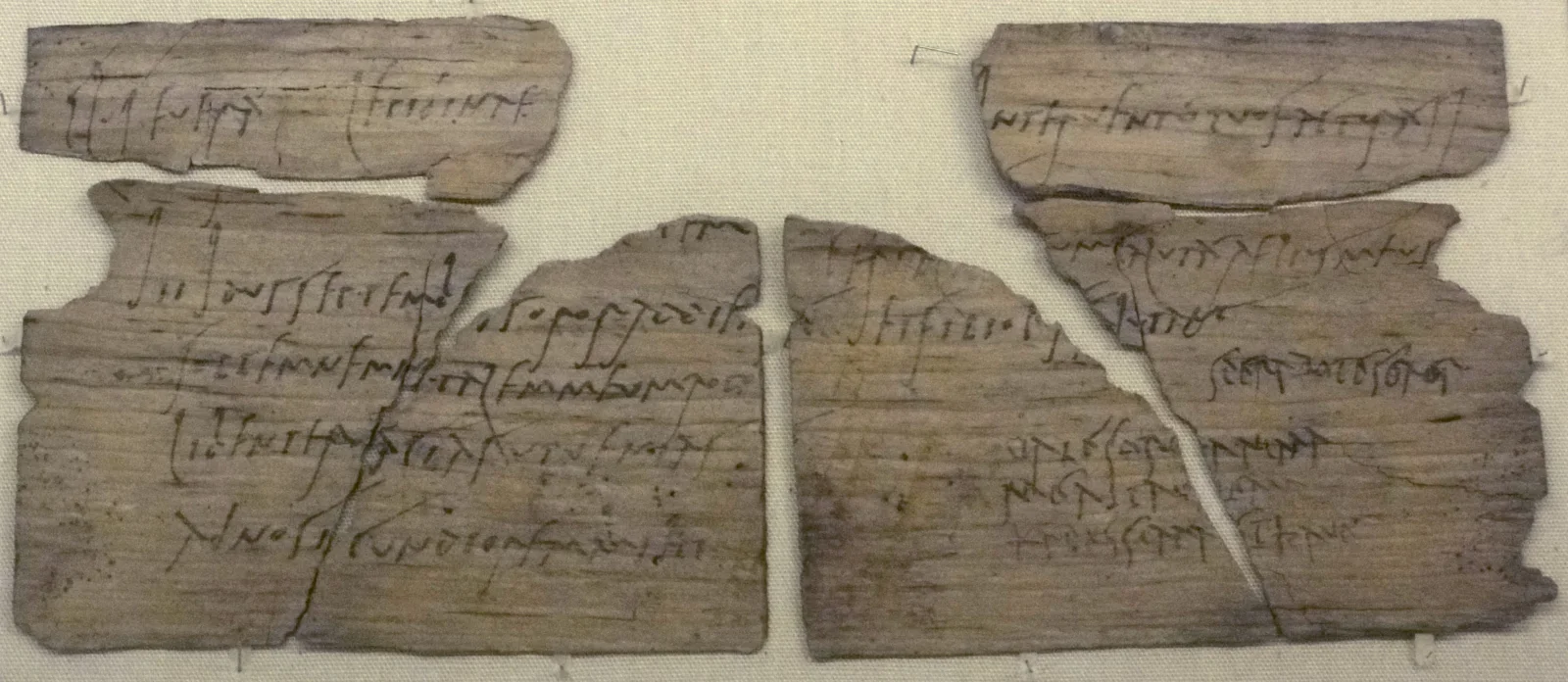
The wall is also evidence of how Rome held Britain for over three hundred and fifty years: not by endless battles but by permanent soldiers, forts and roads. Writing tablets dug up at Vindolanda, a fort near the wall, record the garrison's everyday life, including one soldier's wife inviting another to her birthday party, and show that the troops stationed there came from all over the empire, not just from Italy.
- What did Claudius's invasion do that Caesar's never did?
- Why was Hadrian's Wall built along the Tyne-Solway corridor, and what jobs did it do?
- What do the Vindolanda writing tablets tell us that a list of battles cannot?
4. British resistance: Boudica's rebellion (AD 60-61)
The conquest was not accepted quietly, and the most famous resistance came from a queen. The Iceni tribe of eastern Britain had been allies of Rome under their king Prasutagus. When he died, he left his kingdom jointly to his daughters and the emperor, hoping to protect his family. Instead, Roman officials seized the whole kingdom, took land and property, and treated his widow Boudica and her daughters with appalling brutality.
In AD 60-61, while the Roman governor and much of his army were far away campaigning in north Wales, Boudica led the Iceni and their neighbours the Trinovantes in a huge uprising. The rebels burned the three most Roman places in Britain: Camulodunum (Colchester), Londinium (London) and Verulamium (St Albans). Roman writers claim tens of thousands of people were killed, and the uprising became a severe crisis for Roman rule.
The governor, Suetonius Paulinus, hurried back and met the much larger rebel army at a carefully chosen battlefield. Its location is unknown; the traditional name 'Battle of Watling Street' connects it with that Roman road, but does not identify a proven site. Discipline, armour and tactics beat numbers: the rebellion was crushed, and Boudica died soon after, by poison in one account, by illness in another.
Treat the evidence as part of the story. The surviving narrative accounts of Boudica come from two Roman authors, Tacitus and Cassius Dio, writing for Roman readers; the Britons themselves left no written account. But archaeology supports important parts of the story: beneath modern Colchester and London, excavators find a layer of burnt red earth from the fires of AD 60-61. The lesson of this section is that Rome's conquest was contested, at terrible cost, and seriously threatened.
- Why did the Iceni, who had been allies of Rome, rebel?
- Why might a Roman author describe Boudica differently from how a Briton would have?
- What physical evidence of the rebellion can archaeologists still find, and why does it matter that it agrees with the Roman accounts?
5. 'Romanisation': how Britain changed, and what lasted
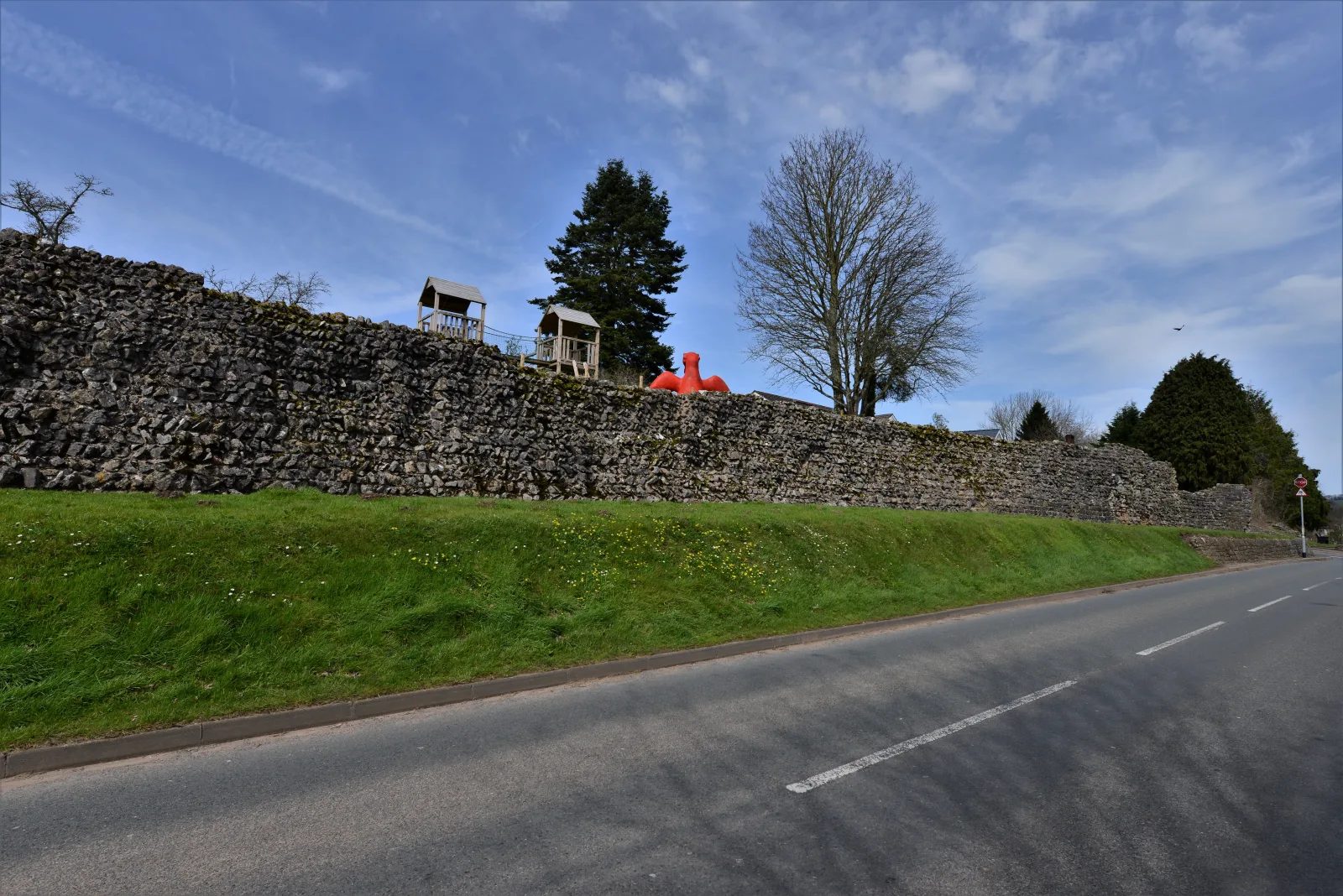
After the fighting, the deeper change: over the following centuries much of Britain gradually became Roman in how it looked and lived, a process historians call 'Romanisation'. A good place to see it is Caerwent in south Wales, built by the Romans as Venta Silurum, a market town for the local Silures tribe, complete with a forum, temple, shops and houses laid out on a street grid. Its Roman town walls still stand today, among the best preserved in Britain, and the modern village sits inside them.
Technology changed daily life. Engineered roads such as Watling Street and the Fosse Way linked new towns, including Londinium (London), Eboracum (York) and Aquae Sulis (Bath). Towns had bathhouses, plumbing and market squares; wealthy villas had glass windows, mosaic floors and underfloor heating called a hypocaust. Coins became common in everyday exchange, new building materials spread, and trade and settlement brought new or newly widespread foods and crops to Britain.
Culture and beliefs changed too, usually by blending rather than replacing. Latin was used in government, the army, inscriptions and parts of urban life, while Brittonic languages continued across Britain; adoption varied by place and status. Roman and British gods were often merged: at Bath the local goddess Sulis and the Roman Minerva were worshipped as one, Sulis Minerva. And within this Roman world a new religion arrived: Christianity. By the AD 300s Britain had organised Christian communities, British bishops attended a church council at Arles in Gaul in AD 314, and Christian symbols appear on Romano-British villa floors and wall paintings.
Then test the word 'impact' properly. Roman government in Britain broke down around AD 410 after troops and officials had been drawn away during crises elsewhere in the empire; this was a gradual separation, not one day when every Roman left. Later people reused parts of the road network, Roman routes and sites shaped towns including London and York even where settlement shifted or paused, and place names, Hadrian's Wall and Caerwent's walls remained. Christian communities also survived in parts of post-Roman Britain. Remind pupils of the Iron Age Britain from section 1's 'before' picture, and ask the unit's central question one last time: what did the Roman Empire change in Britain, and what has lasted?
- What was Caerwent, and why is it good evidence for Romanisation?
- Give one example of Roman and British beliefs blending rather than one replacing the other.
- Roman imperial government and military control ended gradually around AD 410. Name two Roman-period changes that outlasted them.
Common misconceptions and how to address them
MisconceptionBritain had no organised society before the Romans arrived, so the Romans brought 'civilisation' to an empty, primitive land.
Why it happens: The unit's evidence is mostly Roman-built and Roman-written, so the pre-Roman Britons can disappear from view, and Roman authors themselves liked to paint Britons as wild barbarians.
How to address it: Anchor the 'before' picture from the Stone Age to Iron Age unit: Iron Age Britain had farms, hillforts, skilled metalwork, wide trade links with Gaul, and powerful tribal kingdoms, which is exactly why Rome wanted it and why the conquest took decades. 'Impact on Britain' only makes sense as a before-and-after comparison, not as a blank slate.
MisconceptionThe Romans invaded once and won straight away.
Why it happens: Compressed retellings jump from 'the Romans invaded' to 'Britain was Roman', skipping the failures and the slow, contested conquest.
How to address it: Keep the timeline visible: two failed attempts in 55 and 54 BC, nearly a century's gap, the AD 43 invasion, then decades more campaigning, a severe rebellion in AD 60-61, and a permanent frontier barrier from AD 122 even though Roman armies also campaigned and briefly held territory farther north.
MisconceptionHadrian's Wall is, or marks, the border between England and Scotland.
Why it happens: Both are 'the line across the top of England' in pupils' mental maps, so the Roman frontier and the modern border merge into one.
How to address it: Check it against the map in section 3: the wall runs from Wallsend on the Tyne to Bowness-on-Solway, entirely within England and well south of the modern border for most of its length. It marked the Roman Empire's frontier seventeen centuries before today's border existed.
MisconceptionBoudica's rebellion was a small, hopeless protest that never troubled Rome.
Why it happens: Because Rome won in the end, the rebellion gets remembered as a doomed footnote rather than the crisis it was.
How to address it: Give the scale honestly: three towns burned, including the province's capital and London, casualties the Roman sources put in the tens of thousands, and a severe threat to Roman rule before Suetonius defeated the uprising. Resistance was real and consequential, which is exactly why the curriculum names it.
MisconceptionThe 'Romans' in Britain were all Italians, and in AD 410 they all packed up and sailed home.
Why it happens: The label 'Roman' sounds like a nationality, so pupils picture an Italian population arriving and later leaving in one piece.
How to address it: Use the Vindolanda evidence: soldiers on the wall came from all over the empire, and after nearly four centuries many 'Romans' in Britain were Romano-British families who had never seen Italy. Around AD 410 imperial administration broke down after troops and officials had been withdrawn over time; local people remained, while settlements and ways of life changed unevenly.
Guided practice (with answers)
1. Put these four events in order and give each its date: Hadrian's Wall begun, Caesar's first raid, Boudica's rebellion, Claudius's invasion.
Answer: Caesar's first raid (55 BC), Claudius's invasion (AD 43), Boudica's rebellion (AD 60-61), Hadrian's Wall begun (AD 122). Watch the BC trap: 55 BC comes before 54 BC because BC years count down towards AD 1.
2. Julius Caesar came to Britain twice with an army and won battles both times. Why do we still call his invasions failures?
Answer: Because an invasion succeeds by taking and holding the land, and Caesar held nothing: both times he left within months with his whole army, leaving no forts, no garrison and no Roman government behind. Britain stayed independent for almost another century.
3. Give two reasons the Roman army usually beat much larger British forces.
Answer: Any two of: legionaries were full-time professional soldiers who trained constantly, while most British warriors were part-time farmers; the Romans had standard armour, weapons and battle tactics; and the army's engineering (roads, bridges, forts) let it move, supply itself and hold ground in a way no tribe could match.
4. Why did Boudica and the Iceni rebel in AD 60-61?
Answer: The Iceni had been allies of Rome, but when King Prasutagus died, Roman officials ignored his will, seized the kingdom, took land and property, and treated Boudica and her daughters with terrible cruelty. The rebellion was a response to betrayal and brutal treatment, not an unprovoked attack.
5. What was Hadrian's Wall for? Give two jobs it did.
Answer: Any two of: it marked and managed Rome's north-west frontier for much of the occupation; it channelled and watched movement across that frontier through its gates and milecastles; and it housed and organised the soldiers who patrolled it. Roman armies still campaigned north of the wall, and briefly held the Antonine Wall farther north, so Hadrian's Wall was not the limit of every Roman advance.
6. Name three changes Roman rule brought to Britain, and one part of British life that carried on through it.
Answer: Any three of: planned towns and town sites (London, York, Colchester, Caerwent), engineered roads, coins in everyday use, bathhouses and underfloor heating, new or newly widespread crops, Latin, and Christianity. Carried on: many Britons kept farming, Celtic languages survived, and local gods lived on, often merged with Roman ones like Sulis Minerva at Bath.
Independent practice worksheets
ChalkBee's three Ancient Rome worksheet sets below are recall practice on the Roman world: emperors, legions, roads, aqueducts, the Colosseum and Latin. They build the background vocabulary this unit leans on, but they cover Rome broadly rather than Roman Britain specifically, so pair them with this unit's exit ticket, which tests the Britain-focused story (Caesar, Claudius, Boudica, Hadrian's Wall, Romanisation) directly.
Differentiation
- Keep a dates-and-names anchor board visible for the whole unit: 55-54 BC Caesar, AD 43 Claudius, AD 60-61 Boudica, AD 122 Hadrian's Wall, about AD 410 imperial government breaks down.
- Use physical sequencing cards of the five key events for pupils to order on a washing-line timeline before any written timeline work.
- Let pupils retell Boudica's story orally, with picture prompts in sequence, before asking for a written retelling.
- Provide the unit's vocabulary as a word bank (empire, invasion, conquest, legion, tribe, rebellion, frontier, Romanisation) for all written answers.
- Research one Roman site in depth (Caerwent, Bath, Vindolanda, or a Roman road near your school) and present what the surviving evidence shows about life in Roman Britain.
- Compare age-appropriate summaries of Tacitus's and Cassius Dio's accounts of Boudica: what do they agree on, where do they differ, and why might two Roman authors tell it differently?
- Using the road map in section 5 and a modern road atlas side by side, trace Watling Street or the Fosse Way and list modern roads and towns that still follow the Roman line.
- Hold a structured debate: 'Roman rule changed Britain for the better.' Teams must use evidence from both the before picture (Iron Age Britain) and the after picture (Romanisation), including the cost of conquest and rebellion.
Assessment: exit ticket
A short exit ticket sampling the whole arc: the failed and successful invasions, the army, resistance, the frontier, and lasting impact.
1. Which Roman leader tried and failed to invade Britain in 55 and 54 BC, and whose invasion in AD 43 succeeded?
Answer: Julius Caesar's two attempted invasions in 55-54 BC failed to hold any land. The successful AD 43 invasion was ordered by the emperor Claudius and led by his general Aulus Plautius.
2. Give two reasons the Roman army was so powerful.
Answer: Any two of: full-time professional soldiers trained for years; standard armour, weapons and tactics; organisation into legions of about five thousand; and engineering that built the roads, bridges and forts an army needs to move, supply itself and hold territory.
3. Who was Boudica, and what did her rebellion destroy?
Answer: Boudica was queen of the Iceni tribe of eastern Britain. In AD 60-61 she led a rebellion that burned Camulodunum (Colchester), Londinium (London) and Verulamium (St Albans) before being defeated.
4. Why was Hadrian's Wall built, and what does it tell us about the Roman conquest of Britain?
Answer: From AD 122 it helped mark, control and guard Rome's north-west frontier, running seventy-three miles from Wallsend on the Tyne to Bowness-on-Solway. It shows that controlling territory required a permanent, patrolled frontier. It did not mark every Roman advance: armies campaigned farther north and briefly held the Antonine Wall.
5. Name two Roman changes to Britain that outlasted imperial rule, which broke down around AD 410.
Answer: Any two of: Roman routes reused by later road networks, Roman sites and routes that shaped later towns such as London and York, place names associated with castra (-chester, -caster, -cester), standing remains such as Hadrian's Wall and Caerwent's town walls, and Christian communities that survived in parts of post-Roman Britain.
Teacher notes and timings
- Rough timing across six lessons: Lesson 1 the hook plus Caesar's raids (section 1, with the timeline), Lesson 2 the empire and its army (section 2), Lesson 3 Claudius's invasion and Hadrian's Wall (section 3), Lesson 4 Boudica (section 4), Lesson 5 Romanisation (section 5), Lesson 6 guided practice as revision plus the exit ticket.
- Curriculum citation: this unit is built directly on the UK National Curriculum in England's Key Stage 2 History statutory requirement that pupils be taught about 'the Roman Empire and its impact on Britain', and its five sections follow the programme of study's five non-statutory examples one-to-one (Caesar's attempted invasion in 55-54 BC; the empire by AD 42 and the power of its army; Claudius's invasion and conquest, including Hadrian's Wall; British resistance, for example Boudica; and the 'Romanisation' of Britain, sites such as Caerwent and the impact of technology, culture and beliefs, including early Christianity). Source: 'National curriculum in England: history programmes of study', DfE, published 11 September 2013, on gov.uk. Note the UK National Curriculum has no official code system, so 'KS2 History' above is a plain label, not a DfE code.
- Scope discipline: because the statutory unit is about the Roman Empire's impact ON BRITAIN, this unit deliberately leaves out generic ancient-Rome topics (gladiators, Pompeii, Roman myths, the emperors' politics) except where the worksheets use them as background vocabulary. Roman numerals are also a separate maths topic on ChalkBee rather than part of this unit.
- Spelling note: the national curriculum document spells the Iceni queen 'Boudica', which this unit follows. Older books use 'Boudicca' or the Victorian 'Boadicea'; all three name the same person, which is itself a nice evidence point about how history reaches us.
- Sensitive content: Boudica's story involves floggings, assault and massacre, and this unit words it in restrained, age-appropriate terms ('treated with appalling brutality'). Decide in advance how much detail suits your class, and expect questions.
- Evidence caveat to model throughout: the surviving narrative sources used here were written from Roman perspectives (Caesar's own war commentaries, Tacitus and Cassius Dio), and no British-written narrative of Boudica's revolt survives. Archaeology supplies different evidence, including the Vindolanda tablets, burnt destruction layers of AD 60-61 and sites such as Caerwent. Saying 'Roman writers claim' rather than 'we know' is good KS2 historical discipline.
- Accuracy sources checked in July 2026: the DfE programme of study on gov.uk for curriculum wording; English Heritage histories of the invasion, Hadrian's Wall and the end of Roman Britain; the British Museum's KS2 Roman Britain resource for the timeline and unknown location of Boudica's final battle; Cadw's Caerwent Roman Town history; and Historic England's account of Roman London's abandonment and later resettlement.
- Maps (issue #350): section 3 draws Hadrian's Wall against the modern England-Scotland border for the misconception work, and section 5 draws Watling Street and the Fosse Way for the extension task. Both are real, sourced routes (an OS/OSM National Trail relation for the wall, a Natural Earth admin boundary intersection for the border, and the peer-reviewed Itiner-e Roman roads dataset for the roads, all cited in lib/romanbritainmapdata.ts), not hand-drawn, so a class atlas is no longer required for this unit.
Accuracy and sources
These authoritative references support the dates, scope and evidence language used in this unit.
- Department for Education — History programmes of study — provides the statutory Key Stage 2 requirement and the five Roman Britain examples that structure this unit
- British Museum — Timeline of Roman Britain — supports the chronology from Caesar's raids through the AD 43 invasion, Boudica's revolt and the end of Roman rule
- English Heritage — The Roman invasion — explains why AD 43 began a decades-long conquest of much, but not all, of Britain
- English Heritage — Hadrian's Wall history — supports the wall's date, route, frontier functions and its original mixture of stone and turf construction
- English Heritage — Why the Romans left Britain — supports treating AD 410 as a conventional marker in a gradual political and military withdrawal
- British Museum — Roman Britain visit resource — supports the archaeological evidence and cautions that Boudica's final battlefield has not been identified
- Cadw — Caerwent Roman Town — supports the description of Venta Silurum, its street plan, public buildings and surviving town walls
- British Museum — Vindolanda tablets — supports the use of the Vindolanda writing tablets as evidence for everyday military and family life
- Historic England — Watling Street and the A5 — supports the relationship between the Roman road known as Watling Street and sections of the modern A5